If you’re looking to get onto the dark web, your standard browser isn’t going to cut it. You need tools built for actual privacy. We’re breaking down the top browsers like Tor and I2P that keep your identity hidden and your connection secure while you explore.
IMPORTANT NOTICE!!
VERIFIED CARDING CVV SHOPS-
Auto Shop CVV 01 CVVFULLZ
-
Recommended Overall 01 CARDINGCASHOUT
-
Money Transfers 01 SWIFTCARDERS
-
Verified cards and more DARKWEBCC
Exploring the web in 2026 feels riskier than it used to. Honestly, it is because the stakes are higher now. The internet isn’t just a place we visit; it is where we store our entire lives.
Read Also: Best 10 Anonymous Dark Web Browsers for Secure Tor Browsing
The reality is that we are constantly being watched. There are massive organizations and shadowy groups dedicated to tracking every site you open and every link you click. They aren’t just looking at your browsing history anymore. They are analyzing your biometric data and monetizing every scrap of information they can dig up about you. It is a non-stop cycle of surveillance and profiling that makes true privacy feel like a luxury.
Top Hidden Internet Web Browsers – Quick List
- Tor Browser: Tor is still the top pick for anyone who wants to stay anonymous online. It works by routing your data through a series of encrypted volunteer servers, which basically scrubs your digital footprint before you reach your destination. You can use it on its own or pair it with a VPN if you want to hide the fact that you are using the network from your internet provider.
- Subgraph OS: Hardened Linux system with sandboxing and Tor routing for high-level security.
- Freenet: If you need a way to share files or publish content without worrying about takedowns or tracking, I2P is probably your best bet. It is a fully decentralized, censorship resistant network that was built specifically for that kind of privacy. Because it uses peer to peer routing, your data stays within the network and away from prying eyes, making it almost impossible for anyone to block or monitor what you are doing.
- I2P: Is a decentralized network that is all about keeping your communications secure and anonymous. Instead of relying on a central server, it uses a peer to peer setup where everyone on the network helps move data around. It is built specifically for privacy, so whether you are messaging or sharing files, your identity stays hidden within the network.
- Tails: Is basically a portable operating system that you run directly from a USB stick. It is designed to be completely amnesic, meaning it leaves no trace behind on the computer you are using once you shut it down. Every single connection you make is automatically routed through the Tor network, so you do not have to worry about accidentally leaking your real IP address or saving any local history.
- Mozilla Firefox: Mozilla Firefox is a great open-source option that you can tweak to work with the Tor network, but it is not quite as foolproof as a dedicated setup. While you can configure the settings to boost your privacy, it is missing the built-in, hardened security features that come standard with something like the Tor Browser. This means you have to be careful, as a single misconfigured setting or an unpatched plugin can still leave you vulnerable to tracking.
- DuckDuckGo: Is a solid privacy-first search engine that also offers its own browser for those who want to stay off the radar. It comes with built-in tracker blocking to stop sites from following you around and features a simple Fire Button that lets you wipe your entire history and all open tabs in one click.
- Waterfox: Is a browser built on the Firefox engine that focuses on giving you more control over your data. It strips out all the telemetry and data collection that normally comes with modern browsers, so your browsing habits stay with you. It also has built-in tracking protection to stop advertisers from following you across the web, making it a reliable choice if you want the speed of Firefox without the extra tracking.
- Brave: Is a popular browser that automatically blocks ads and invasive trackers the moment you install it. It is built for speed and privacy, but it also includes a built-in Tor mode for when you need to hide your location. While it is more convenient than switching between different apps, keep in mind that its Tor integration is better for quick privacy tasks rather than high-stakes anonymity.
- GNUnet is a unique framework that lets you build your own decentralized networks for secure, friend-to-friend communication. It is designed to replace traditional server-based systems with a peer-to-peer model that protects your identity and your data. Since it is built on a foundation of privacy and censorship resistance, it is a powerful tool for anyone looking to create truly private digital spaces without relying on big tech infrastructure.
What is Dark Web and Why is It so Important?
To really get a handle on the tools used for the dark web, you first have to understand how this space actually differs from the rest of the internet.
Most of us spend our time on the surface web, but just beneath that is the deep web. This is simply the massive part of the internet that search engines do not index. We are talking about things like your online banking portal, private databases, and password protected files. In fact, the deep web makes up about 90% of the entire internet, and there is nothing shady about it. The dark web is just a tiny sliver of that, less than 0.01%, and it is essentially a hidden layer that you can only get into if you use specific software and configurations.
The dark web gets a bad reputation because people immediately think of illegal marketplaces, but that is only one part of the story. It is actually a vital resource for journalists, whistleblowers, and regular people living under heavy government censorship who need a safe way to communicate.
In this corner of the digital world, anonymity is the only thing that matters. It is a place where you can browse without the constant fear of being watched or silenced. With the way online surveillance and cybersecurity threats are evolving in 2026, the need for these private spaces is only growing.
- Governments are pushing back with much stricter regulations to try and get a handle on what happens in these hidden corners of the web. This has turned into a constant cat and mouse game. As states deploy advanced tools like deep packet inspection and machine learning to monitor and block traffic, developers have to keep evolving their software to stay one step ahead.
- We are also seeing the rise of decentralized marketplaces powered by blockchain. Because these platforms use cryptocurrency, they allow for anonymous transactions that are incredibly hard for law enforcement to track. It has essentially professionalized the way stolen data is traded and how services like Ransomware as a Service are sold, giving criminals a much more secure way to operate.
- AI is changing the game for cybercriminals. They are using it to automate their attacks, building smarter malware and churning out highly realistic deepfake scams and phishing emails at a scale we have never seen before. Back when attacks were just data driven, traditional security could usually keep up, but these days, defending against a threat in real time has become a massive challenge.
- In this environment, a dark web browser is not just about accessing hidden content anymore. It has become a vital defensive tool for anyone, whether an individual or a company, who needs to protect their data and maintain their privacy against these growing threats.
Best 10 Dark Web Browsers Today – Fresh List
1.Tor Browser

Tor used to be the only real game in town for accessing the dark web, and it is still the industry standard today. While most people know it as the primary gateway to hidden sites, it is also just a solid tool for everyday browsing if you want to make sure nobody is tracking your every move.
It is completely free and open-source, which is a big deal for transparency. Interestingly, it actually started out as a project by the U.S. Navy Research Laboratory to secure government communications before they eventually opened it up to the public. Essentially, the browser works by masking your identity from prying eyes, giving you a safe and private way to explore the dark web without leaving a trail.
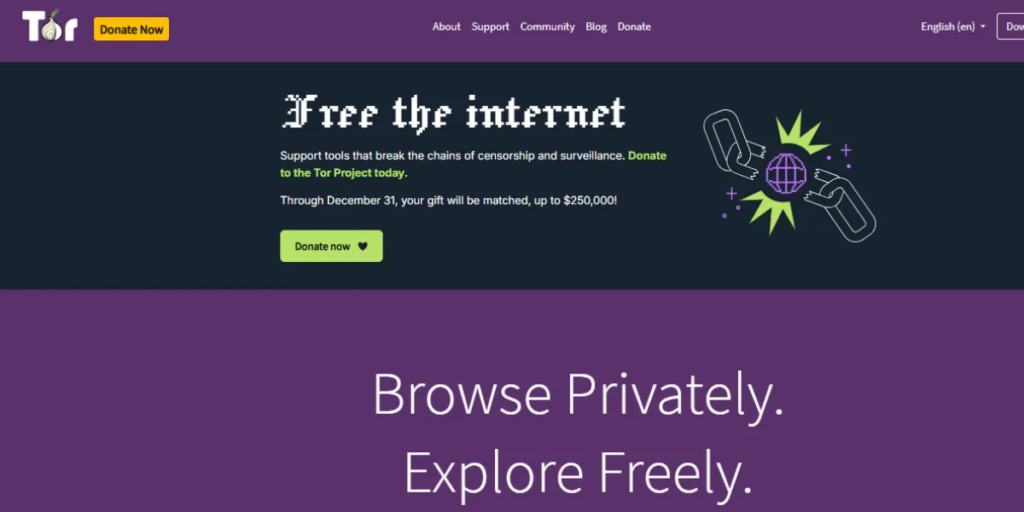
This browser works by routing all your traffic through a “relay,” which is just a network of thousands of volunteer servers. The name “Tor” actually stands for “onion routing,” which is a perfect way to describe how it protects you. It essentially takes your request, bounces it randomly around the network, and wraps it in multiple layers of encryption—just like an onion.

The whole network is built on a series of nodes: an entry, a middle, and an exit. The entry node sees your actual IP address and knows you’re trying to reach a hidden site. The middle node is there to bridge the gap; it knows where the request came from and where it’s going, but it has no idea what your real IP is.
By the time the data hits the exit node, it knows exactly which site you’re visiting, but it doesn’t know who you are. This setup is designed specifically to protect your identity. Because of all these shifting layers, there isn’t a single point in the chain that can link your identity to your activity. It makes it nearly impossible for anyone monitoring the network to piece together your browsing history.

Get Cash App Transfer: Turn $250 to Six Figure Fortune
ORDER NOW
How To Hack Bank account? Order Wire Transfer Services
GET BANK TRANSFER
How To Hack ATM - Clone Card Trick For ATM Hacks
GET CLONE CARD
Shop Online Without OTP. No Carding Knowledge Required
BUY NON VBV CARD
Getting onto the dark web is actually pretty straightforward. You just need to download and install the Tor Browser. The setup is simple and works pretty much the same way as installing any other software, regardless of which operating system you’re using.

I2P, or the Invisible Internet Project, is a privacy tool that operates on a completely different level than Tor. While Tor acts as a gateway to the broader web, I2P is built with a peer-to-peer architecture specifically designed for secure communication and hosting “hidden services” (known as Eepsites) within its own isolated environment.
Rather than being a traditional browser for surfing the web, I2P functions as an anonymous communication layer for things like email, messaging, team collaboration, and file sharing. A major technical difference between the two lies in their routing methods: while Tor uses “onion routing” to create a single circuit for your entire session, I2P takes a more decentralized approach to handling your data.
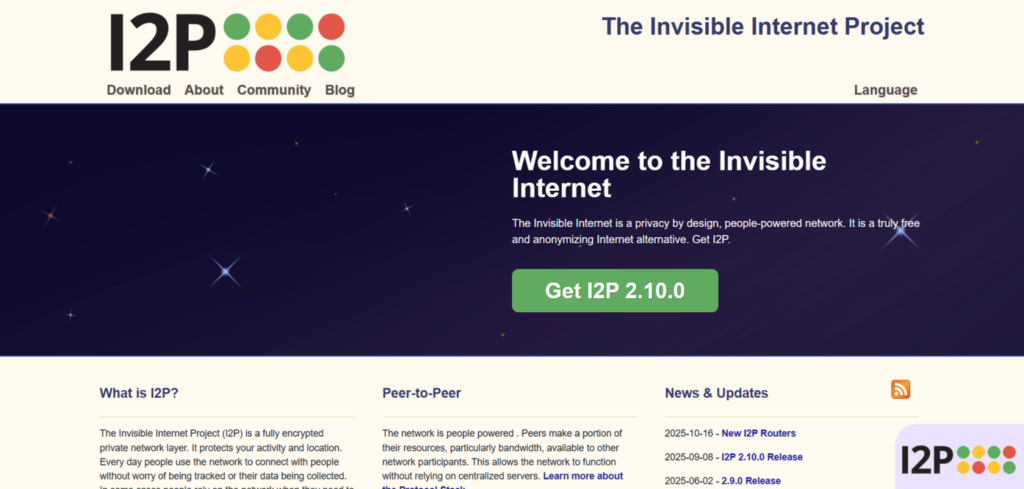
I2P uses what its developers refer to as the “garlic routing,” which is essentially a more complex but similar approach, laying out the logic of grouping multiple messages into one & encrypting in layers & send through inbound and outbound tunnels. However, given the reduced size of the network, this process of continuously bundling messages into biggerpackets could potentially slow down I2P, but it does certainly allow for a stronger resistance against specific kinds of traffic analysis attacks through isolating and mapping out single single messages.
Additionally, since there are no clear web exit nodes, there is no risk of I2P traffic leaving the internal network, making it less vulnerable to traffic analysis, and a great option for running a completely self-contained and anonymous ecosystem.
3. Freenet

Freenet operates as a peer-to-peer network designed for anonymous communication and is built specifically to resist censorship. It isn’t meant to be a general internet proxy; instead, it exists as an independent, self-contained ecosystem with its own file-sharing capabilities, forums, and websites, often referred to as “Freesites”.
The way the network is set up helps to prevent censorship by making it really hard to get rid of data. Instead of just storing an encrypted file on one device, Freenet breaks the content into small encrypted pieces. These pieces are then spread out across many different users on the network. This means that even if someone tries to target and remove specific parts of the data, the original information can still be accessed because it’s stored in so many different places.
To achieve these anonymity goals, Freenet distributes published file content – encrypted into fragments – across a large, distributed data store maintained by a P2P network of nodes. The individuals who published the content, as well as the individuals operating the nodes storing pieces of the content, are kept anonymous.
Freenet connects to the regular internet in an “open” mode called “Opennet”, but it also connects to a “Darknet”. The information you store in Freenet can be accessible from the Opennet, from the Darknet or from both. The Darknet mode is particularly interesting because connections are only made to other Freenet nodes which are run by people you trust. In this mode Freenet can function as a strong resistance against mass surveillance. It is likely that no ISP or government would be able to find out that you are using Freenet in this mode.
Another big difference between Freenet and Tor is that Freenet is based on an asynchronous communication paradigm: files you upload to it stay available even after you’ve gone offline, allowing for a persistence and ability to resist censorship not present with Tor.

In this tutorial we will go through the process of installing and using Tails (The Amnesic Incognito Live System). In some parts of the tutorial I refer to this operating system as Onion Safari/Tor Browser, but it is also possible to use Tails without the Tor Browser. The system can be burned to DVD or installed on a hard disk or compact Urlez drive. Tails is described as “amnesiac”. There is a good reason for choosing this word.
This Linux Howto describes the features of Tails (The Amnesic and partially Anonymous Live operating system) and how you can transform your Linux box into a “Privacy Haven”. This howto also covers the process for making an encrypted persistent storage volume in Tails Linux. Persistence in Tails Linux allows you to save session information of your choice to an encrypted partition volume from session to session.
You should also consider encrypting your computer, which will protect against many types of attacks that Tor is not able to prevent, such as malware and physical attacks where you are detained and your laptop physically seized from your possession. It’s worth noting that even if your laptop is seized and someone access it while it is running, you will only need to shut down the laptop to delete any records of your browsing history, your local files and any sensitive information that was stored in computer memory.
For some activities, the digital trace of a user—i.e. how much of a “trailing” digital path they leave—is relevant. Tails makes the promise to users that whatever they are doing, once they are finished with their session, their digital trace will be gone and they will have no further connection to their IP address. This is a large promise for Tails to make, especially for users working on high-risk activities such as source communication or censorship circumvention.
Read also: The Best free Private Browsers for extra Anonymity
The Tails Project and The Tor Project have merged operations to improve communication around security for both projects. This merger will allow users of Tails to learn about new security features as they come out and also take advantage of the new Arti backend.
Former NSA employee Edward Snowden has announced his endorsement of a new Linux distro that he claims to use in order to browse the web safely. Dubbed Subgraph OS, the Linux distro is designed with the intent of securing computer systems from advanced cyber threats, and it utilises the notorious Tor network to anonymously route internet traffic. Essentially, the distro was designed to offer users a safe surfing environment – a niche also filled by alternative distros such as Tails – however Subgraph OS offers a strong advantage over its counterparts in its ability to repel attacks written with advanced capabilities rather than vulnerabilities. An image showcasing the browser features which Snowden revealed he uses can be seen above on the official Subgraph OS website.

This is the opposite of Tails’ philosophy of running all of your services off read-only media for plausible deniability, though hopefully with many more safeguards in place for daily driver use on a disposable machine, if such a thing is possible. The distribution is designed for daily use in hostile environments, and includes a number of novel features to make that as safe as possible. For starters, the core distribution, called Citadel Linux, is configured with DM-verity to make the filesystems immutable and tamper-proof.
Even a single bit change will prevent it from booting. Subgraph OS also takes advantage of one of the most complex sandbox implementations currently available in Oz in order to isolate applications like email clients or web browsers very rigidly. If a malware infection were to penetrate the sandbox, it would face a difficult battle propagating to the rest of the system.
Subgraph OS additionally secures itself by isolating certain system components from untrusted execution, which means even if your system is compromised (unbeknownst to you) the malware won’t be able to spread to the rest of the system. This, and other features, make for a great option for securing an existing operating system.

For those who are confused, Firefox is more than just a browser that connects to Tor. It can be set up to surf regular portions of the internet simultaneously, which is a lot easier for most people to use than the real Tor Browser. Note that Firefox over Tor does NOT provide normal anonymity and security benefits of Tor. That said, using Firefox over the Tor Network is a great way to access the dark web, and is probably the easier path for most to take to the sites that live there. For general anonymity and security needs however, you are much better off using the real Tor Browser. It is basically just an upgraded version of Firefox and from what I have worked with so far it is a very solid browser. This is the only option I have found that actually works for entering the dark web.
Many people get configuration for browser anonymity wrong and not even realise the risks to which they are exposing themselves. While manual configuration can be done correctly, there is often a lot less risk for most people with a purpose built browser like Tor. While it’s nice to have control over manual configuration for certain browser settings, those with enough technical know-how can probably find it to be a good middle ground for fine tuning browser settings while still gaining anonymity benefits.

We also recommend using Waterfox, an Open Source browser that is based on Firefox in order to protect your data and all types of information on the Internet. You cannot use this browser to conduct deep web browsing or anonymous safe dark web browsing. However, you will become a better private surfer by having another browser to use separate from your public identity. Another advantage of this browser is the fact that telemetry is off by default. Waterfox doesn’t collect your data by default. It includes tracking protections as well as “Oblivious DNS” which means your Internet Service Provider cannot track your individual DNS requests. An ad blocker is not included.
For most users, using The Tor Browser is straightforward. Even the computer novice will find The Tor Browser familiar and similar to other, more common browsers such as Flock, Seamonkey, Iron, and Internet Explorer. The usual navigation bars and menus are all in the same place, and make it so that using The Tor Browser is easy. However, please keep in mind that The Tor Browser is NOT the same browser that it once was. Until 2016, The Tor Browser was based off of Internet Explorer and users can expect to see some updated features and changes within The Tor Browser UI.
Another new feature of The Tor Browser is an Ad Blocker. However, this is not like any other Ad Blocker you may have used. This Ad Blocker is called the tracker block. Disable all trackers for this block by selecting this option. This setting with Torguard will also disable all public IP address from your Internet Service Provider, and utilize Oblivious DNS. This video shows how Torguard works on the surface web using a surface web browser.
The Tor Browser is not shown in any of these videos unless additional tools have been installed for anonymously surfing the surface web. This video is for the Web 2.0 / social media newbie and shows how to install and power up a fresh copy of Waterfox.
Even though Brave has features to help keep you anonymous, there are more ways you can achieve online anonymity using the browser. By now you probably know Brave’s features such as blocking of ads and trackers, a very fast browser, and a natural user experience that’s hard to resist, which is why a lot of people are now jumping on the Brave bandwagon. In this guide, we will teach you how to run your private windows within the Tor Browser.

Many of you know that Brave supports Private Windows, but you may not know that you can make those Private Windows Anonymous through Tor. Brave’s Private Window and anonymous IP address routing via Tor can help keep you anonymous online, but it is not the same as the anonymity and safety provided by the official Tor Browser.
In addition to the Brave browser and software for other uses, Brave can also be used to acquire cryptocurrency and act as an ad-blocker enable. It can now be run anonymously on your PC using the anonymous communication network Tor. The Brave interface will be anonymity hidden from the rest of the internet, but not from other computers on your local network. Motherboard contributor Brian Krebs said he ran Brave with Tor proxies and noted that there is no encryption on the Brave interface. However, by running the software from the web page window, Krebs was not anonymity hidden from view on his local network. Krebs also said he was able to retrieve his browser “fingerprint,” though that is not visible when using official Tor software.

GNUnet is a complete software framework for decentralized peer-to-peer networking, not a simple browser. Its high-level purpose is to create a global network that respects privacy, security, and the fully decentralized form of grouping. GNUnet offers many features and serves as a foundation for developing new applications.
“Both the CEO and CTO of Brave recommend The Brave Browser and The Tor Browser for anonymous private browsing. We recommend these browsers for safe and legitimate anonymous use. They’re great for regular anonymous browsing and most anonymity use cases. However, we would not recommend using these for high-level security use cases such as accessing the dark web. As with any use of anonymous browsing software please use these products with extreme caution and at your own risk after fully understanding the risks involved.”
Free File sharing, Decentralized naming (GNU Name System (GNS)), Secure communications. One of the most interesting and unique features of GNUnet is its “Friend-to-Friend” (F2F) topology. This means that users can connect to other users that they consider to be trusted friends.
Because Messages on the Mumble Hide network don’t ever go out onto the public internet, they can’t be protected by spam filters (like the ones you use to keep email spam out of your inbox), nor could they be siphoned off by some enterprising nation-state. Messages are routed through other users who are currently logged into the network. Thus, you can choose to have messages you send filtered out as spam by other users on the network.
Note that Tor provides good anonymity for current Internet communication. However, for some (also negative) use cases and even attacks GNUnet provides a completely different security model using its F2F (friend to friend) subsystem. Instead of anonymously resolving peers to a central database adversarial mapping and network structure analysis is moved to the networking level.
The company DuckDuckGo mainly focuses on privacy. In addition to the privacy-respecting search function it now also offers a browser for mobile and desktop devices to make private web surfing on the surface web also possible on the surface.

The DuckDuckGo browser will by default block most third-party trackers, uses HTTPS wherever possible and with a click of a button you can clear all of your browser data.
A note to the uninformed: DuckDuckGo is a privacy-conscious web browser – NOT a dark web backdoor and NOT a means to achieve anonymity via Tor (although the privacy-conscious browser is listed as a program on your computer in the Programs menu).
By default, Tor Browser uses DuckDuckGo as the search engine. DuckDuckGo is a search engine that doesn’t track users, or log where users came from or what they searched for. This is one of the privacy oriented services that Tor incorporates.
I did look at some of the dark web content, and the TorHiddenWiki does still exist and you can still utilise it as a search engine. While it defeats the purpose of going to the dark web in the first place, the wiki does make for a great search engine for the surface web but private. The DuckDuckGo browser is not intended for use on the deep web.
Quick Comparison: Best Top Anonymous Dark Web Browsers
| Browser | Anonymity method | Primary use case | Operating system/platform | Standout feature |
|---|---|---|---|---|
| Tor Browser | Onion Routing | Anonymous Browsing, Censorship Resistance | Windows, macOS, Linux, & Android | Multi-layered Encryption |
| I2P | Garlic Routing | P2P Communication, Hidden Services | Windows, macOS, & Linux | Internal Network & No Exit Nodes |
| Freenet | Distributed Storage | Censorship-Resistant Publishing & File-Sharing | Windows, macOS, Linux, & Android | Distributed Data Store (“Darknet” Mode) |
| Tails | Live OS + Tor | Maximum Anonymity & Zero Footprint | Windows, macOS, & Linux (Live USB) | Amnesiac Design (Leaves No Trace) |
| Subgraph OS | OS Hardening + Tor | Persistent Compartmentalized Security | Linux | Application Sandboxing & Immutable OS |
| Mozilla Firefox | Manual Proxy Configuration | Private Browsing (Manual Tor Configuration) | Windows, macOS, Linux, & Android | Open-Source & Highly Customizable |
| Waterfox | Telemetry Blocking | General Private Browsing | Windows, macOS, Linux, Android | Disables Telemetry by Default |
| Brave Browser | Tor Proxy | Convenient Private Browsing | Windows, macOS, Linux, Android | Optional Tor Integration in Private Windows |
| GNUnet | F2F Topology | Decentralized P2P Networking & File-Sharing | Linux, Windows, macOS | Friend-to-Friend Network Model |
| DuckDuckGo’s Web Browser | Tracker Blocking | Privacy-Focused Surface Web Browsing | Windows, macOS, Android, iOS | Built-in Tracker Blocking & Fire Button |
How to Stay Safe While Using Dark Web Browsers
A secure hidden internet browser for accessing the dark web is a good place to start, but no single solution can promise 100% anonymity and online security. Rather, a number of tools used in tandem, in conjunction with a healthy dose of real-world common sense, will be your best bet online.
This video also goes a step further, adding anonymity to your currently anonymous online presence.
Step 1: Use a VPN Before You Connect to Tor
Most people think that using the Tor Browser to anonymize their IP will also anonymize all of their BitTorrent activity. What they don’t realize is that Tor only anonymizes connections between two relays in Tor, in this case the two relays at different country locations that are helping to route your browser traffic. Observers within Tor (like your ISP) will be able to tell that you are connecting to the Tor Browser, which can never happen, and observers outside of Tor will know that you are connecting to Tor, which you can always deny.
Residents in the surrounding area are being affected. Use a VPN and then encrypt your traffic to login to Tor.
This layered approach works like this:
- The VPN will first encrypt your internet traffic so that your ISP won’t even realise you are using Tor, and then that encrypted traffic will get sent into the Tor network where it will get further encrypted.
- It is then sent to the VPN server and then it is forwarded to the entry node of the Tor network.
- Please note that due to the nature of both VPN and Tor technologies, your ISP will only be able to see evidence of a connection to a VPN server, and will not be able to determine that you are also connecting to Tor.
- For most people getting on to Tor means downloading the official Tor Browser or client and then manually connecting to the anonymising network using your existing internet service provider. That’s changed with the guys at NordVPN adding an Onion layer to their existing VPN client and app. So you can now use NordVPN and be anonymised by both them and Tor, is this an interesting addition to the world of anonymity tools?
Using a VPN to access the dark web:
- There are some VPNs run by cyber crooks, but for people who want to stream the Premier League without resorting to any illegal activities the best option will be a reputable VPN service with a good track record, no logs policy and decent support team to deal with any security issues you get yourself into. The popular travel podcast online, Litt’s Travel Tips has come to the same conclusion after carrying out audits on the VPN provider.
- Download and install our VPN client software for your smartphone / tablet. Please follow the installation instructions on the installation screens.
- Onion over VPN option is not available for all server types. Please check available server types for activating Onion over VPN option in Settings > Connect to a Server.
- So now we are actually going to enter the Dark Web with our very own Dark Web Browser. Before we do this, it is very important to note that in order to browse the dark web, you will need to download the official software called the Tor Browser, also known as a bundle of software and tools collectively known as as the Tor package.
Step 2: Employ Dark Web Monitoring
Implement your disaster recovery strategy before the disaster occurs. Find out if your credentials have been compromised to the dark web before they can be used to commit financial crimes.
CyCorp continuously monitors dark web forums and Underground Clandestine Marketplaces such as Hackers, Silk Road and other similar marketplaces for threats to you and your company. This type of intelligence includes: Stolen email and password lists, full credit card numbers with associated information as well as Business Information Intel specific to a particular company.
Turn the tables on the cyber-criminals frantically trying to hijack your accounts.
Cyber Monday is upon us and VPN providers are falling over each other to offer the best deal on subscription. We already told you about Express VPN’s amazing offer of a 12-month subscription for just $99USD, however there are some very competitive offers available too. While many VPNs will slash the price of their subscription for a limited time on Cyber Monday, it’s not all the same and many will offer you less than an all-time low price. NordVPN’s 3-year subscription for Cyber Monday will drop from its normal $3.00 per year down to an all-time low $2.75 per year for a three-year subscription – a 75% drop from its normal rate.
How to Use a Dark Web Monitor:
- Launch NordVPN Connect.
- Access the Dark Web “Monitor Feature” of Open Threat Protection Pro™ to view the bullseye icon on the left-hand menu.
- run monitor: A monitor on Dark Web looks exactly the same as to get information to which accounts your credentials have been exposed. First select the monitor type and then click on the “Turn on” button under Action. This monitor will then start running and searching the Dark Web for any exposures of your credentials.
- Action on alerts related to compromised accounts: Change your password for the affected account
We recommend that users who have re-used this password at other sites also change their password at those sites and enable 2-factor authentication.
Step 3: Use strong passwords and enable multi-factor authentication (MFA)
Many people believe that the main consequence of a security breach or malware attack is the theft of login details to a website or other piece of information that the user thinks is important. However, the real value to the thief is not the account login details but the information held within the account that can be used for criminal activity online within days of the breach or alternatively, sold on the so called ‘Dark Web’ to other criminals as part of a package with other recent security breaches on individuals and companies. Much of this loss can be prevented by using high quality, unique, secure passwords and following good password practice.
There is an increasing trend of Internet users reusing the same password on multiple sites. This means that a single compromise of a single password can lead to identity theft on multiple sites. The problem is that having a unique password for every single one of your user accounts is very difficult to manage. This video teaches you how to create, manage, update and remember what seem to be endless difficult to remember passwords using a password manager.
Enable 2 factor authentication (2FA) on services that support it such as banks, online services and social media accounts. Many services now require not only a password but some other method of verification. Many banks now send One Time Passwords (OTP) to your mobile before granting you access to your online banking session.

Many banks also use apps (such as Authy) to generate the One Time Passwords. Many other services with accounts can also enable 2FA and you can also usually enable 2FA for individual accounts. Many systems have multiple methods of using 2FA, e.g. SMS and mobile app. Even if someone hacks or steals your password, they can’t access your account unless they also steal your one time password sent to your mobile phone.
Some Apps also support 2 factor authentication (using methods like facial recognition, finger print recognition or touch ID on your phone) and password management (if the App supports this feature).
Step 4: Always be Afraid of Downloads & Clicks
The Dark web is the most malicious part of the internet. With normal internet usage people can easily get their computers infected by visiting malicious websites or downloading malicious files from untrusted sources like torrent and Peer to Peer etc. The dynamics of dark web is changing very frequently so one needs to be very cautious with all the content. Having a good antivirus is not enough; one needs to keep all the devices, files, applications and Operating Systems updated with latest patches.
Step 5: Personal Information
Online anonymity on the dark web is different to that found online on the regular surface web. People use the secure and hidden internet browser called the Tor Browser for anonymity on the dark web but they don’t register for online accounts on surfaces web sites like a university web site, a mail web site etc. where normally anonymity is lost.
Conclusion
In the coming years the internet will become more integrated and complex, culminating on 15 April 2026 in a myriad of extremely advanced and complex threats. But in the meantime, there is something more to discuss and take advantage of: there is no substitute for a good toolkit, and a healthy dose of reality.
As people get more familiar with Tor Browser and start to look for “similar, anonymity enabled browsers for the clearweb” they may be surprised to learn that there are actually many other options that can more meaningfully improve privacy for regular web browsing that they may not have considered. In addition to the fully anonymity enabled suite that is Tor Browser, there are privacy-enabled browser suites, operating system-level privacy suites like Tails and Subgraph OS, etc. In this post we’ll look at some of the browser-only privacy suites.
Top Dark Web Browser Downloads: Choose the Browser for You Finding the right top dark web browser downloads can be challenging because the different browsers available offer a variety of different services that make it rather hard to choose. As most of the services available on the dark web are accessible to users, finding the best service based on your needs can make it even more difficult. Due to the fact that all of the browsers offer related services, choosing the best dark web browser downloads available to use can be difficult. If you plan on visiting the regular web and various dark web versions of different popular websites, choosing to download the famous client, Tor, would be a good idea out of all the different dark web browser downloads. Download safely and responsibly. Some users report that using a VPN with Tor adds another layer of anonymity to your Tor sessions.
Users of the anonymity enabled communications system known as Tor are not always visiting dark web sites and services of an illicit nature, some are actually just sharing files or engaging in other legal P2P type activities, and using underground black markets or anonymity driven social (social?) networking sites. Using dark web services can also add another layer of anonymity and security for users involved in illicit activities online. Of the many search engines available that can be used to search the dark web I find DuckDuckGo to be the best option, even though obviously the best search engine is capable of sucking if not maximally utilized.
Whether it is a new TV remote, another kitchen gadget, the new smartphone / tablet / laptop that you have purchased you will need an internet connection. And not only will your new gadget need an internet connection but you will also have been supplied with the latest application software to enable you to use the device and a new browser with which to browse, search and explore the internet. Remember also that you need to consider the security of your new gadget to prevent unwanted hackers accessing your contents. In addition you need to undertake a digital spring clean to remove all the rubbish and unwanted Apps that you may have accumulated over time before setting up your new gadget properly.
FAQ
Some countries allow people to use a deep web browser (such as Tor Browser) to do a lot of things online, but understandably, they don’t support people in doing things that are illegal with the tools. In fact, while staying anonymous online is a good thing, it will not stop you from going to jail if you commit something illegal. Journalists, activists, and privacy-conscious citizens depend on anonymity every day to avoid censorship and communicate in a secure way.
Any part of the internet where normal search engines cannot reach, which would need you to log in or carry out other acts of authentication to access, like web-based email, online banking, subscription, or pay services, is the deep web. The dark web is just a small slice of the deep web that developers hide, which you can only access if you use special software.
The two most common methods for personal information to be published online on the Dark Web are via data breaches and malware. Data violations happen when hackers steal user data from a business’s database and sell that information on dark web marketplaces. Malware can also be installed on your computer that will find sensitive information and send it directly to a bad actor.
Although the Tor Browser and Tails are free to use, in general, it’s not a good idea to use any for-profit “free VPN” or “free dark web” service. Most are great to begin with, but offer many downsides—limited server locations, slow speeds, and unreliable security—among many free services that log your data and sell it to third parties.

Related Articles
The Best free Private Browsers for extra Anonymity in 2026
When you access the internet through a regular web browser, your data can be mined by hackers, carders, government agencies, and...

Online Privacy: 10 Steps to Protect Your Data From AI (2026)
Are you concerned with your online privacy? The 2026 internet is a...
How to Hide Your IP Address in 2026: The Complete Guide to Online Privacy
Think of your IP address as your digital home address. It is...


2026’s Best SOCKS5 Proxies for Secure Carding and Anonymity
In the world of online transactions, security and anonymity are paramount, especially...

Leave a comment